
Disclosure: Certified Angus Beef® brand sponsored this post. Opinions are my own.
As a barbecue competitor, I have smoked quite a few briskets in my life. I’ve been given some tough critiques and some glowing reviews.
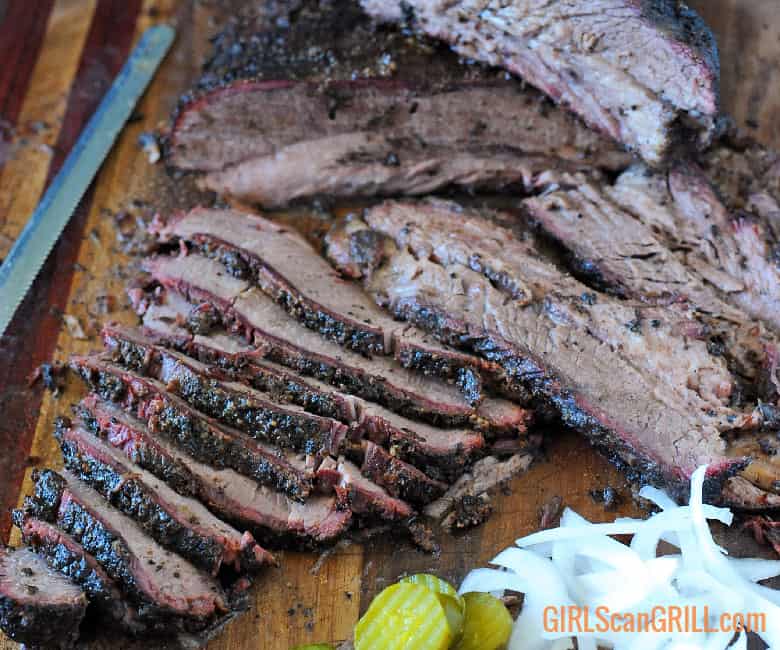
In order to get a championship call, you’ve got to turn out a brisket with fantastic taste and tenderness. I’ve found that these four stages help yield the best results.
Save this BBQ Tip
Enter your email, and I’ll send this link directly to your inbox. Plus, you’ll get new BBQ recipes and tips weekly.
How to smoke brisket step 1: Beef Selection
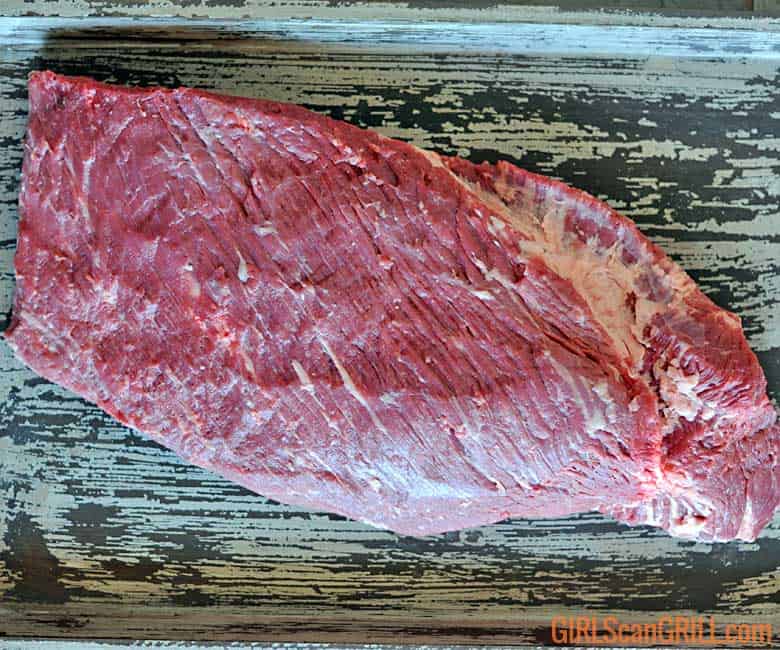
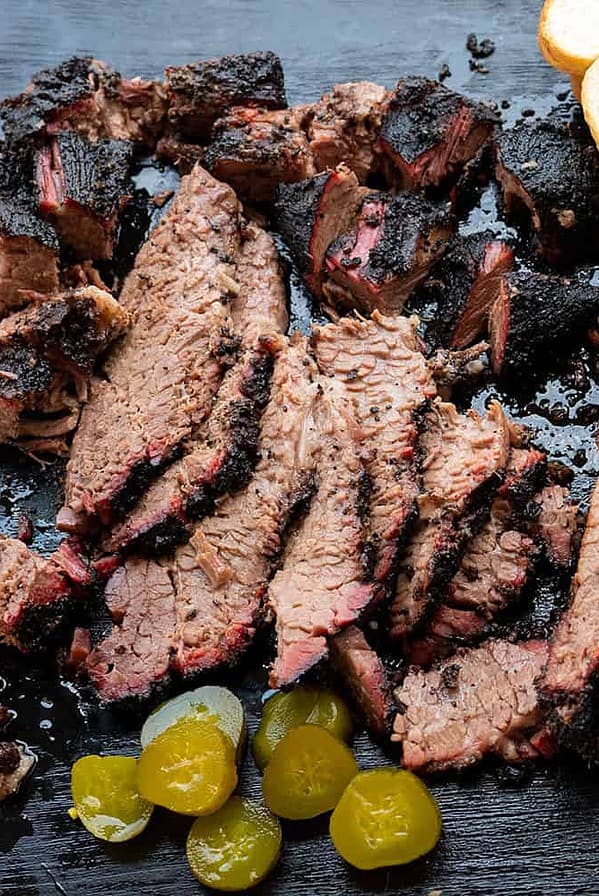
If you want delicious, tender smoked brisket, I highly recommend starting with a quality, marbled Certified Angus Beef® brand packer brisket. A packer brisket is one of the largest pieces of meat you’ll find at the grocery. It consists of the two main muscles that make up a brisket – the flat and the point. The flat is the muscle commonly used for brisket slices, and the point is the fattier muscle used for burnt ends.
The brisket comes from the pectoral (chest muscle) of the cow. It rests above the front legs. The connective tissue in the muscle makes it a pretty tough cut. If you mix more marbling with that tissue, you’ll have a tastier end result.
When you find the brisket at the grocery, it should be marked with one of three USDA grades: Select, Choice or Prime. Select is the lowest grade, meaning it will have the least amount of marbling. Comparatively, Prime is the highest grade, meaning it will have more marbling and flavor.
Certified Angus Beef® brand grades out in the upper Choice zone. Plus, the brand requires their beef to meet stringent quality standards that guarantees great taste and tenderness. For competitions, I spend a little more and purchase their Certified Angus Beef® brand prime. It represents the top 1.5% of all beef.
To find a Certified Angus Beef® brand retailer near you, visit their buyer’s guide.
How to smoke brisket step 1: Pre-season
While the first stage of flavor happens on the ranch with proper care and feeding, step two happens in your kitchen.
Once you’ve selected your perfect brisket, trim down the fat. Remove the hard chunks of fat near the point, and trim the fat on the bottom, so that it’s no more than 1/4-inch thick. This will ensure that the rub will cook into the meat.
Apply your rub the night before. What you’re doing is essentially dry brining it, like you would a turkey. The salts in the rub will draw moisture from the meat and aid in its tenderness.
There are a ton of BBQ rub options on the market, and it’s fun to experiment with the varieties. I recommend starting with a base of kosher salt and coarse-ground black pepper.
Once the brisket is coated, place it on a pan or in a large bag and refrigerate it overnight.
How to smoke brisket step 3: Create Bark
Eventually, all of that rub you applied is going to create a beautiful bark during the smoking process. This is also the stage when the smoke ring forms.
Smoking temps usually range from 225F-275F degrees. Unless, you want to cook brisket hot and fast.
Because I live in Las Vegas where we have basically zero humidity, I add a water pan to my smoker.
Smoking brisket is all about controlling the flavor and the tenderness. We’re already controlling those by starting with quality beef and dry-brining it. Adding humidity is one more step to control that tenderness.
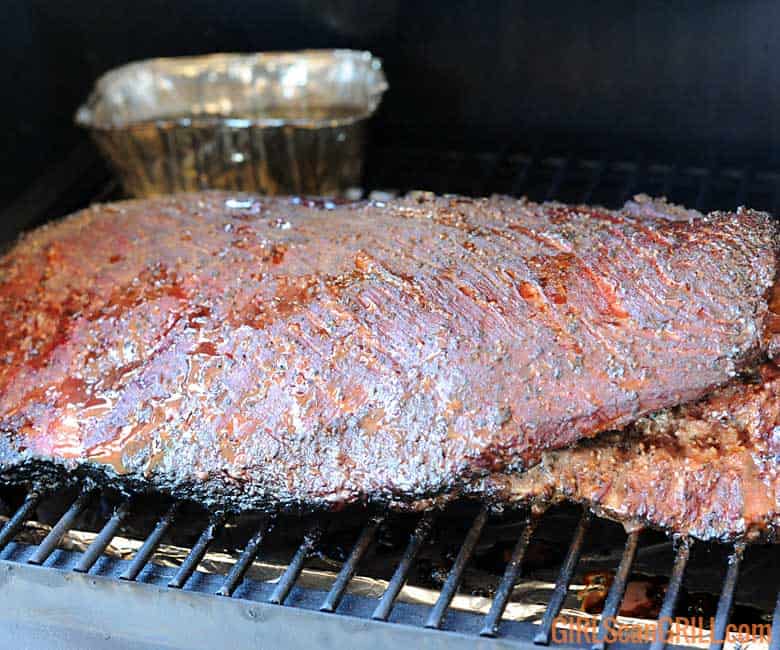
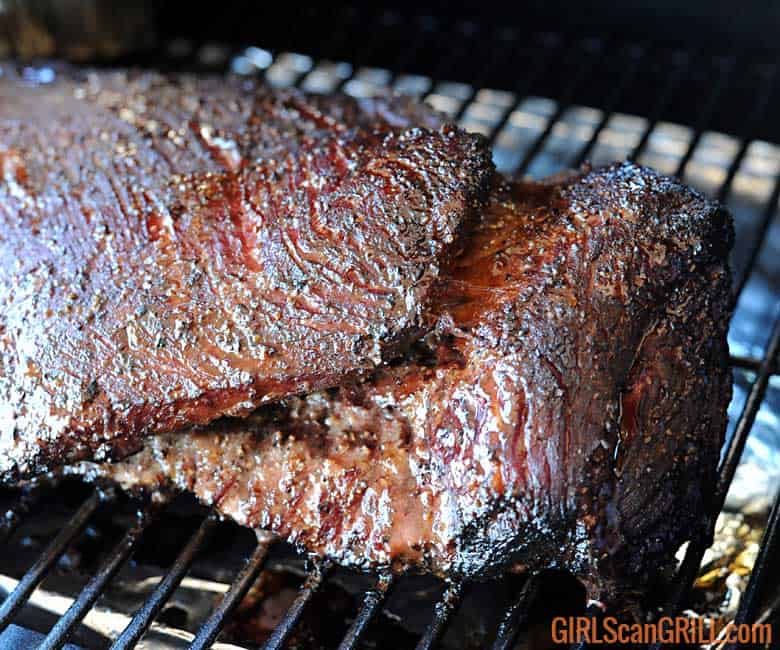
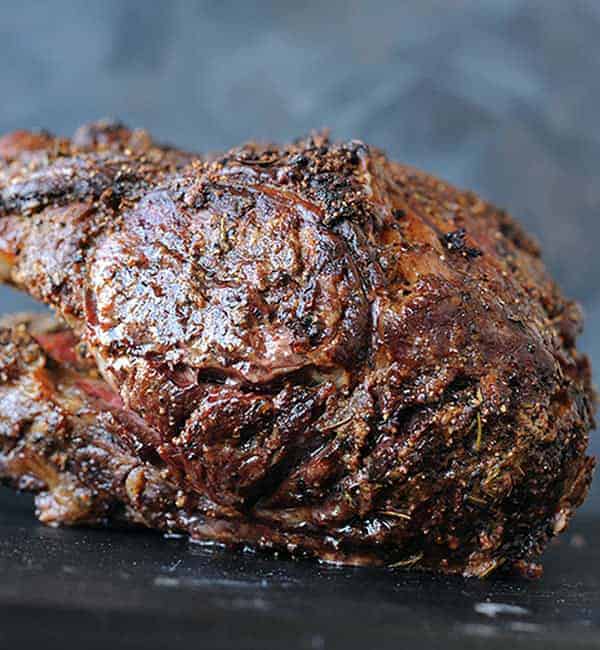
After 4-8 hours on the smoker, depending on the size of your brisket and your smoker temp, you will develop a gorgeous mahogany bark. This crunchy, salty exterior is the contrast to the tender meat that makes barbecue brisket so coveted.
When you see this color, your brisket will have an internal temperature between 160-170F degrees.
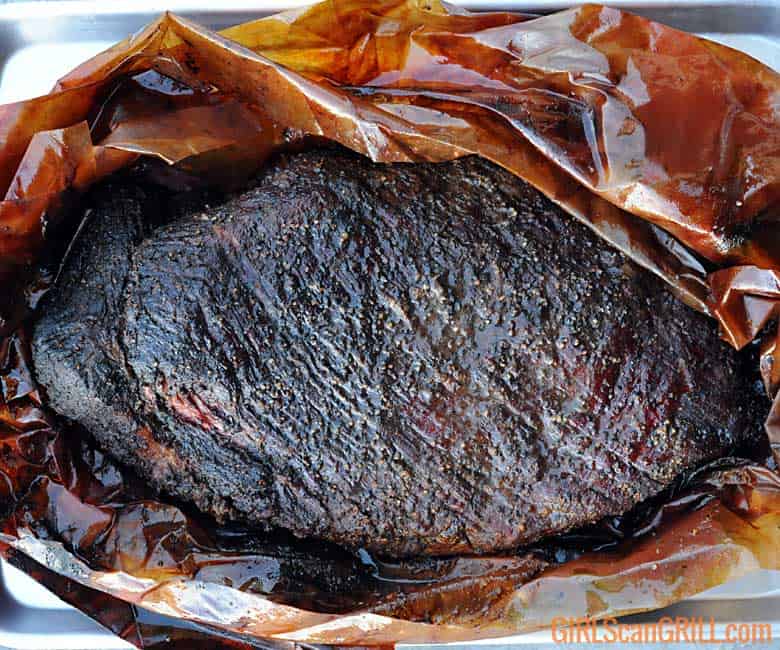
At this point, I recommend using the Texas crutch, which means wrapping the brisket, until it’s done.
You can wrap in a couple of sheets of foil or peach paper. I prefer using foil because I’m in a really dry climate. I find it locks in more moisture.
If I don’t control the moisture throughout the cook, my brisket ends up dry. Others swear by peach paper, saying it preserves the bark better.
Try them both and see which works best for you. Either way, add a bit of beef broth to the wrap to keep the juices flowing.
How to smoke brisket step 4: Wait for the Magic Moment
I’m sorry to say that you can complete the first three stages and still end up with crappy brisket. I’ve been there and done it.
There is nothing more frustrating than spending all of that time and energy on a brisket and then slicing into a dry piece of meat, which is why this final stage is so important.
I’ve found there really isn’t a set temperature or time clock that will tell you when brisket is done. Sometimes it’s done when the internal temperature reaches 190F. Sometimes it needs to cook to 210F. It all depends on your climate, altitude and the meat you started with.
So how do you know when brisket is done? It’s all about the feel.
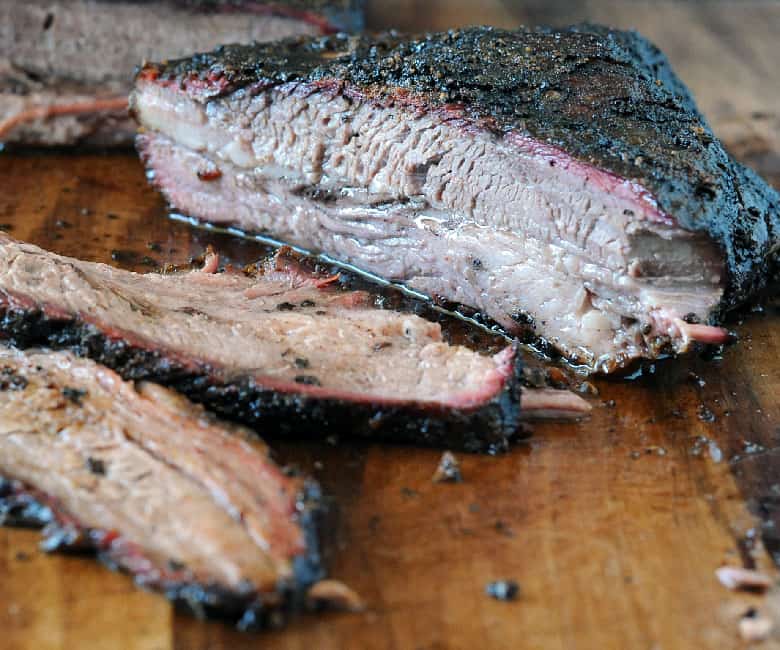
When you insert the temperature probe into the meat, ignore the reading and just look at how easily it glides in. So long as it slides into the meat like soft butter, you’ve just smoked a masterpiece. If the probe has some resistance, it needs more time.
Once you’ve created buttery beef goodness, wrap the entire brisket in a towel and transfer it to a cooler (without ice). Finally, let it rest for at least an hour – three if you have time. Just like a good steak, the resting phase will help guarantee juiciness.
Now that you know the 4 stages to smoking brisket, give it a shot, and let me know how it turns out. As always, drop me a comment below or shoot me an email, if you have questions.
For even more tips, check out my brisket guide infographic and full smoked brisket recipe.










Do you smoke with flat and tip connected or do you cut one off?
If I cook hot and fast, I prefer to separate the flat and point, because they cook slightly differently. If I cook slow and low, I tend to keep it together. Here’s a tutorial: https://girlscangrill.com/bbq-tips/separate-brisket-point-and-flat/